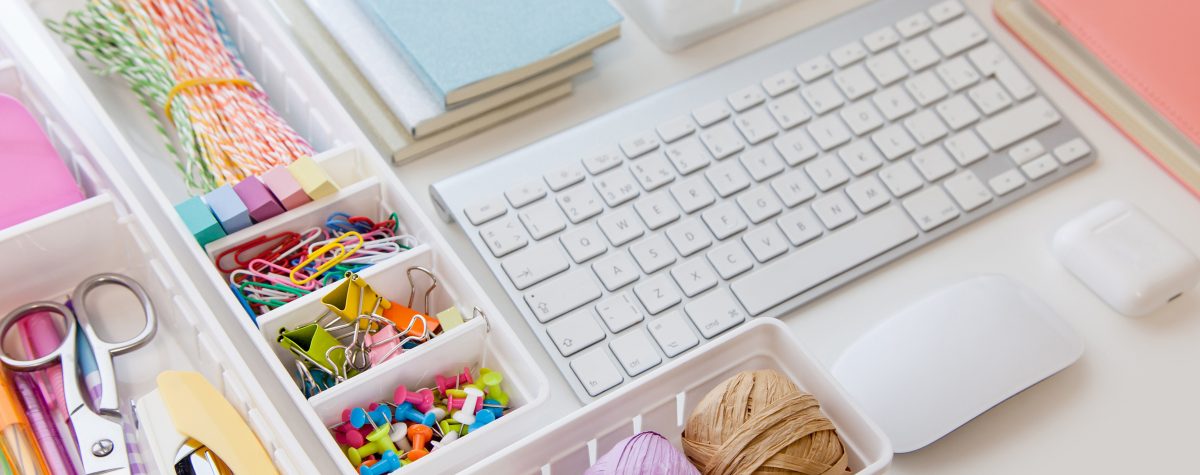
An organized homeschool space isn’t just about aesthetics—it directly impacts the flow of the school day. When supplies are easy to find and learning materials are stored efficiently, this means less stress and distraction for both you and your children.
Whether you’re homeschooling in a dedicated room or just a corner of your home, these practical homeschool organization tips will help you create a space that supports learning and keeps everyone on task.
1. Start with what you already have
Before you run to the store for fancy containers or furniture, take a look at what’s already in your home. Many household items can be repurposed to help streamline your homeschool area. Clear storage bins can hold books or art supplies, while magazine holders work well for organizing notebooks and folders.
Hanging mail sorters are great for managing worksheets or incoming assignments, and over-the-door shoe organizers are surprisingly useful for storing small items like flashcards, scissors, or markers. Even a rolling cart can become your teaching station. The key is to get creative, don’t break the bank, and use what fits your space and routine.
2. Give all materials a designated place.
One of the simplest yet most powerful steps in getting organized is assigning a dedicated place for every item and student. Each child should have a clearly defined area for their books and supplies, whether it’s a shelf, drawer, or cubby.
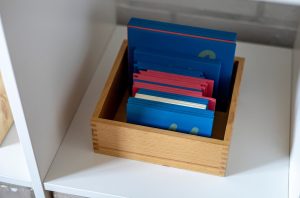
Shared materials—like flashcards, craft supplies, or science materials—should also have a central spot. And don’t forget about your own planning tools, from our curriculum guides to grading sheets. When everything has a home, setup and cleanup become easier, and your daily flow improves.
3. Label everything.
After setting up your storage areas, labeling everything helps turn organization into a consistent habit. Labeling bins, drawers, folders, and shelves makes it easier for children to recognize and take responsibility for their materials. Use names, subjects, or grade levels to make everything clear.
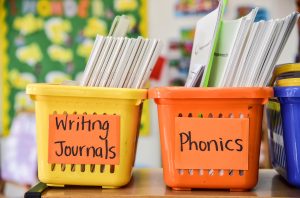
If you’re keeping work in binders or portfolios, label them by subject or term so you can easily track progress throughout the year. This step may feel small, but it can dramatically reduce confusion and lost materials.
4. Embrace color.
Assigning a specific color to each child or subject can help keep things organized and add a touch of fun to your space. For example, math might be blue, language arts red, and science green.
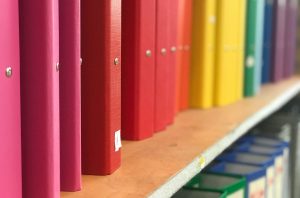
You can maintain the system using matching folders, notebooks, and even storage bins. This approach gives children a clear, visual cue to recognize their materials.
5. Maximize flexibility
If your homeschool setup is in a tight space or needs to move with you, portability is key. A rolling suitcase can serve as a mobile classroom when you’re on the go. Binder rings can keep flashcards or laminated materials together in one tidy bundle. A dish rack can double as a file folder organizer.
Even a simple caddy meant for cleaning supplies can be repurposed to hold pencils, markers, glue sticks, and more. The best homeschool organization tips often come from thinking outside the box and adapting tools to fit your unique space.
There’s no one-size-fits-all approach to organizing a homeschool space. Some families thrive with structured schedules and color-coded bins, while others prefer a more relaxed setup that can adapt to changing needs. What matters most is that your system helps you stay on track and supports your family’s learning goals.
Whether you’re using a dining room table or a full home classroom, take the time to find (or create) tools that make life easier. Homeschool organization doesn’t have to be perfect. It just needs to be practical and work for you and yours.


gala:
June 6, 2020I am going try home school for the first time,so any ideas for eight and ten years old children
Reply to this Comment
Ewelina:
June 11, 2020Hi, I am going to try home school for the first time, so any idea for 6 and 8 years old kids?
Reply to this Comment
Replies to this comment:
Abeka Admin:
June 18, 2020Hi there! Are you looking for advise on homeschool space or on choosing a homeschool program?
Reply to this Comment
Eiliana:
June 21, 2020I am homeschooling for the first time, small condo, no extra room for “classroom”. We have to use the living room and rearrange the furniture before we start and after we finish. Any suggestions on how to use small spaces without having to rearrange the living room everyday?
Reply to this Comment
Replies to this comment:
Bethany:
December 19, 2020Hey! Late to the party, but what about using a storage ottoman or coffee table to double as storage space for your school items? Then when you are done, they'll be out of sight, but still have a place!
Reply to this Comment
patricia wilburn:
July 30, 2020Thank you very much for sharing
this site with me. I will be involved with virtual/home schooling for the first time this year due to the pandemic. I have a kindergartener and 4th grade. It will be challenging but i am looking forward to it.
Reply to this Comment