
Over the years, education has shifted between programs focused on mastering one topic at a time and those aimed at faster learning and improved retention. Many modern programs expect students to fully master a concept before moving on. While this sounds wonderful in theory, it often assumes that all students learn at the same pace and remember everything after a single lesson. Amy Yohe, Abeka’s Managing Editor and a veteran educator, explains that the Abeka curriculum addresses these challenges through spiral learning—an approach that revisits and builds on concepts over time, reflecting both traditional educational methods and how students actually learn and retain knowledge.

“Spiral learning acknowledges that not all students master a concept the first time they encounter it,” Yohe explains. “Repetition is essential to learning, because students progress at different rates and require multiple opportunities to engage with a concept before mastery occurs.”

Spiral Learning as Intentional Reinforcement
Within the Abeka curriculum, spiral learning refers to the deliberate revisiting of concepts over time, with each encounter reinforcing prior understanding while extending it. Yohe describes spiral learning as a cognitive bridge between what students already know and what they are preparing to learn. “Spiral review provides what we often call ‘a hook to hang new knowledge on,’” she explains. “Before introducing a new concept, students are reminded of something familiar so that new learning builds naturally on existing understanding.”
This structure ensures that learning is cumulative rather than fragmented. “Not every concept needs to feel like entirely new learning,” Yohe notes. “When students can connect new material to prior knowledge, learning becomes more accessible and less overwhelming.”
To illustrate this progression, Yohe uses a metaphor that captures both repetition and advancement. “I like to think of spiral learning as a spiral staircase,” she explains. “Students return to familiar content, but they are not simply repeating the same material. There is a gradual—and in a well-designed curriculum, almost imperceptible—movement upward.”
Addressing the “Forgetting Curve” Through Strategic Review
Research shows that, without review or practice, learners tend to lose much of what they have learned, also known as the “forgetting curve.” Yohe emphasizes that this reality reflects the limitations of human memory rather than instructional failure. “We recognize that we forget things,” she explains. “There is only so much information the human brain can retain at one time, and when new information is introduced, older material must be refreshed in order to remain accessible.”
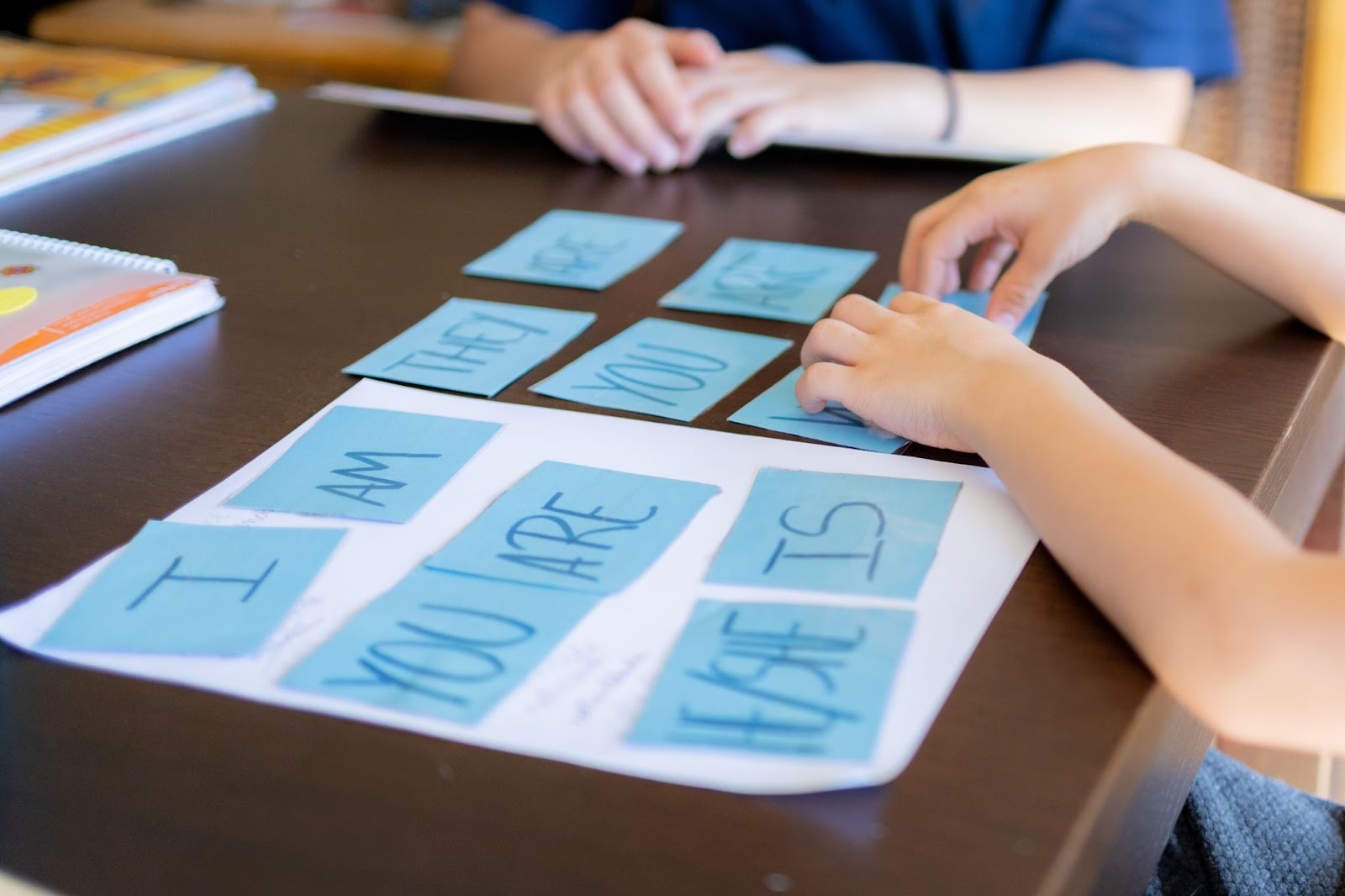
This understanding directly informs Abeka’s pacing and review structure. “If a concept is introduced on one day, it will almost certainly appear again the next day,” Yohe explains. “It may show up in oral review, in written practice, or in a visual or hands-on format. Depending on the complexity of the concept, it will continue to reappear over the following days and weeks.”
Yohe emphasizes that these review intervals are carefully planned rather than incidental. “There is a strategy behind how often concepts are woven back into the curriculum,” she explains. “Sometimes review exists simply to keep a skill sharpened. Other times, it is intentionally placed because we are preparing students to add another layer to a related concept.”

A Proven and Enduring Educational Approach
Although Yohe was a young student when Abeka was founded, she expresses confidence that spiral learning has always been at the heart of the curriculum. “I am confident that spiral learning has been part of Abeka since the beginning,” she states. “It is a proven, traditional approach to education that reflects how students have successfully learned for generations.”
At the same time, Yohe underscores that longevity does not preclude refinement. “Spiral learning is not present simply because it has always been there,” she explains. “Because we believe in it, we continually strengthen how it is implemented.”
Feedback from parents and teachers plays a key role in this process. Yohe recalls instances where customer feedback indicated that students needed additional practice with specific concepts. “When we hear that a concept is not ‘sticking’ as well as expected, we take that seriously,” she explains. “That feedback allows us to strengthen the spiral—both in the current grade level and in future coursework.”

Strengthening Retention Across Grade Levels
Spiral learning is especially evident in the way concepts develop across grade levels. Yohe points to geometry as a clear example. “Students begin by identifying basic shapes at an early age,” she explains. “They may not yet understand technical definitions, but they are building foundational knowledge that will support more complex learning later.”
As students progress, Abeka curriculum revisits and expands on earlier concepts. “There is a deliberate curriculum map that ensures geometry concepts are revisited year after year,” Yohe notes, “all the way through the formal high school geometry course.” Even nuanced distinctions—such as the differences in how symmetry is defined in mathematics and science—are introduced intentionally, once students have acquired sufficient background knowledge to understand them.
Writing instruction follows a similar progression. Yohe explains that students move from letter formation to sentences, from paragraphs to multi-paragraph compositions, and eventually to research-based writing. “By the time students are writing full compositions,” she notes, “they often realize that they have already developed the necessary skills—they simply did not recognize the complexity of what they were doing as it was being built step by step.”

Supporting Students with Diverse Learning Needs
One of the most significant strengths of spiral learning is its ability to accommodate students who require additional time to grasp a concept. “Students learn at very different paces,” Yohe explains. “Some grasp concepts quickly, while others need multiple exposures before understanding solidifies.”
Rather than requiring complete mastery before moving forward, spiral learning allows instruction to progress while ensuring that students will encounter the concept again. “We do not have to remain on a single concept indefinitely,” Yohe explains. “Because it will return in spiral review, students have additional opportunities to strengthen understanding as they move forward.”
In some cases, Yohe notes, comprehension emerges only after students encounter a more advanced application. “For certain learners, the next layer of a concept is what ultimately makes the earlier material make sense,” she explains.
This structure is particularly beneficial for students new to the Abeka curriculum. “There will always be gaps when students transition between programs,” Yohe notes. “Spiral review helps address those gaps by revisiting essential skills rather than assuming prior mastery.”
Preparing Students for Lifelong Learning
Ultimately, Abeka’s spiral learning approach reflects a broader educational philosophy that views learning as cumulative and ongoing. Yohe emphasizes that this model mirrors learning beyond the classroom. “Even as adults, we layer new knowledge on top of what we already know,” she explains. “Very rarely does something truly stick the first time without repetition and practice.”
By reinforcing concepts over time and teaching students to connect new information to existing understanding, spiral learning fosters adaptability, confidence, and intellectual curiosity. “Students learn how to make connections independently,” Yohe explains. “They learn how to look for what is familiar so they can understand what is new.”
In an educational landscape marked by frequent reform and shifting priorities, Abeka demonstrates a continued commitment to retention in the form of spiral learning—not merely a curriculum design choice but a formative educational practice that prepares students for higher education, lifelong learning, and thoughtful engagement with the world.



Comments for Spiral Learning: How Abeka Builds Knowledge That Lasts
Add A Comment
Your email address will not be published. Required fields are marked *