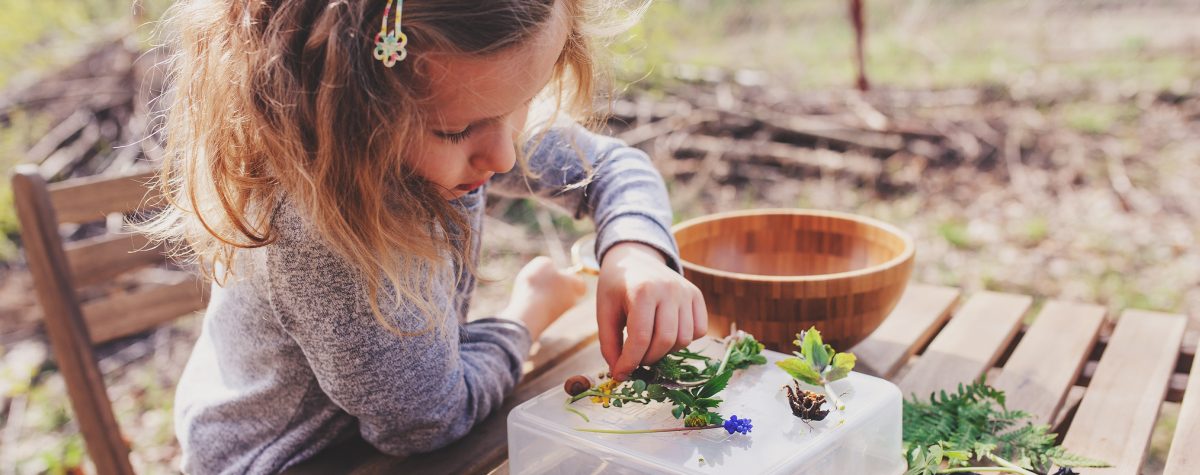
Sometimes the word “science” can bring to mind laboratories and researchers in white coats. As a homeschool parent, you might ask, “How can I make this complicated subject interesting for my child?”
The good news is that you don’t need a laboratory or complicated equipment to make science fun! If you take advantage of common household items and the natural world, you can help your child explore science in a fun, simple, and effective way—and all right from home.

Seven Science Learning Ideas
Here are seven science learning ideas inspired by everyday experiences. All of them can happen in your home or backyard, and none need complicated materials!
1. Make Ice
Freezing water in an ice cube tray lets your homeschooler see water go through a physical change—from a liquid to a solid state.
2. Bake Bread
Baking bread is a simple way to see flour, water, and salt react to yeast. Your child can observe the dough as it rises in the hot oven. After, your family can enjoy a delicious, nutritious snack!
3. Make Butter
Making butter is a hands-on way for your child to see a physical change. You can simply pour heavy cream in a bottle or jar and have your child shake it. After 30-60 minutes, the butter solids will separate from the buttermilk! After you strain and salt the butter, you can serve it with your homemade bread.
4. Use Household Ingredients for Experiments
Perform experiments with basic household ingredients. For example, you can try this simple, beginner-friendly geode craft from Abeka!
5. Care for Plants
Whether you want to keep a house plant or plant a vegetable garden, gardening lets your child see how plants grow over time and how they respond when watered.
If you opt for a vegetable garden, you can plant seeds with your child and check regularly to watch the plants sprout. Your family can then use the produce in homecooked meals.
6. Predict the Weather
Observing the weather offers many learning opportunities. Ask your child to identify types of clouds and predict what they think the weather will be like.
7. Watch the Seasons
Watch the plants, animals, and weather change from season to season. Give your child a journal where they can write what they notice about each season as it passes. They can look out for new flowers in spring, ripening fruit in summer, leaves changing color in autumn, and leaves falling as winter approaches.

Still Need a Science Curriculum?
We hope these ideas inspired you with new ways to teach your child science right from home. While you plan activities, make sure you pick up your high-quality science curriculum from Abeka!
Find your science curriculum today!



Comments for How to Make Science Fun at Home [Plus 7 Activities]
Add A Comment
Your email address will not be published. Required fields are marked *