
Editor’s Note: This is part two of a two-part series. To jump to the first installment, click here.
In the first installment of “Preschool Children Are Dynamic Learners, If Given the Chance,” Cindy Quinlan, senior educational consultant for Abeka, and Maranatha Sweet, educational consultant for Abeka, walked us through key areas of Abeka’s preschool program.
In our second installment, they share valuable insights on language development and how Abeka provides a biblical foundation even at an early age.
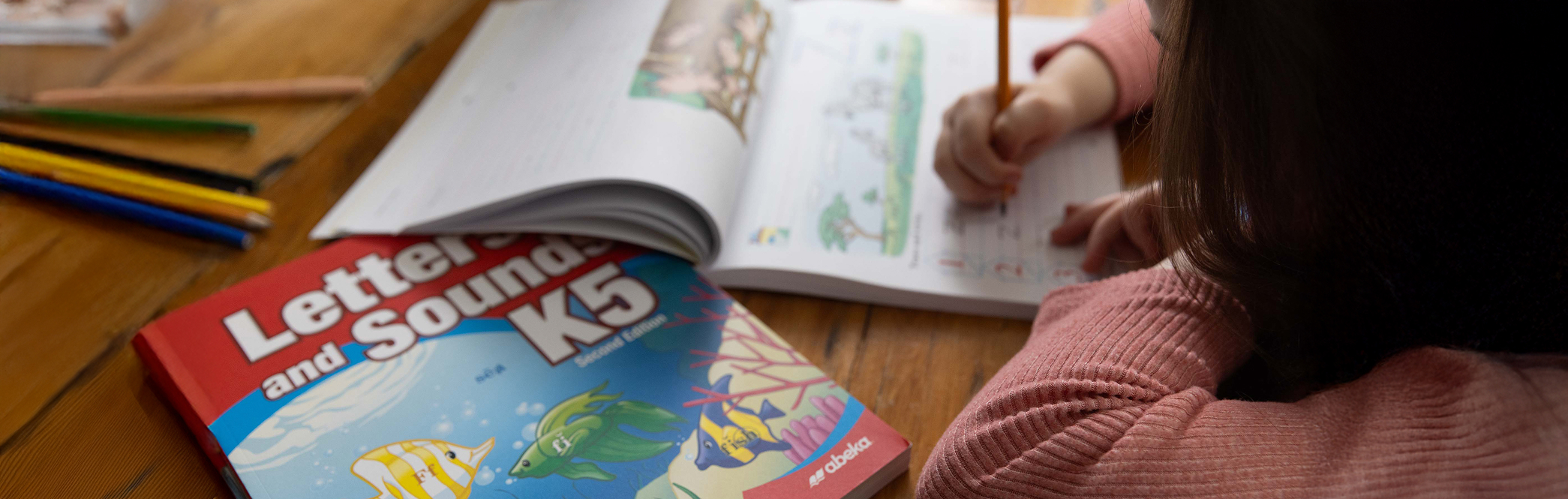
Good Stewards of Language
Language development for preschoolers is important because this instruction takes advantage of a young child’s ability to make rapid gains in the early years of brain development. Yet, it’s a balance. By following our curriculum, homeschool families can be confident the pace and frequency of their instruction isn’t overwhelming for young students.
So, for instance, when we think of language, we break the science of reading into five big ideas:
- Vocabulary
- Phonemic awareness
- Phonics
- Fluency
- Comprehension
“It’s very early as far as considering reading formally, but we have a tremendous opportunity to develop vocabulary,” said Sweet. “Because they’re learning how to speak, it’s something we’re already naturally working on with them. So it’s an area we can build in intentionally to set them up for reading comprehension.”

The same balance applies to the other elements of reading. As it relates to phonemic awareness, homeschoolers will find the curriculum introduces phonics in its most foundational stage. It’s simply instruction that teaches preschoolers to recognize letters and that letters make sounds.
“We’ll spend quite a bit of time on emphasizing stories that have the same sound repeated in it, which trains ears to hear specific sounds,’ said Sweet.
This balance and the incremental, early introduction to language, as Quinlan says in the series, makes it possible for Abeka K4 and K5 students to quickly become fluent readers.

A Curriculum That Makes the Most of Rapid Brain Development
Abeka’s preschool curriculum is specifically designed to meet children where they are developmentally, while gently challenging them to grow. It’s more than worksheets, it’s a full-bodied experience that engages a child’s heart and mind.
Abeka’s preschool curriculum is designed to educate with purpose. When a preschooler is coloring a bear or tracing a letter, we’re reinforcing fine motor skills, visual recognition, and patience all at once. In these years — in a child’s infancy, up to ages two and three — the pathways in the brain are making connections or pruning away connections that aren’t being used.

“There is often more going on in these children’s brains than many of us are aware of,” said Quinlan. “When there is an understanding of just how many connections are being made, we often take more advantage of the time we do have.”
The curriculum builds upon itself, layering skills day by day. So, once a child enters kindergarten, that child is confident and capable — not just academically, but emotionally and spiritually.
Here’s a quick snapshot of what’s typically included in a preschool day with Abeka:
- Bible time with stories, songs, and simple memory verses.
- Phonics and numbers introduced through playful, repetitive activities.
- Arts and crafts that develop creativity and coordination.
- Music and movement to encourage rhythm, energy, and joy.
- Character lessons modeled through stories and teacher guidance.
This balance of fun and function helps children develop a love for learning from the very beginning.

Faith as the Center
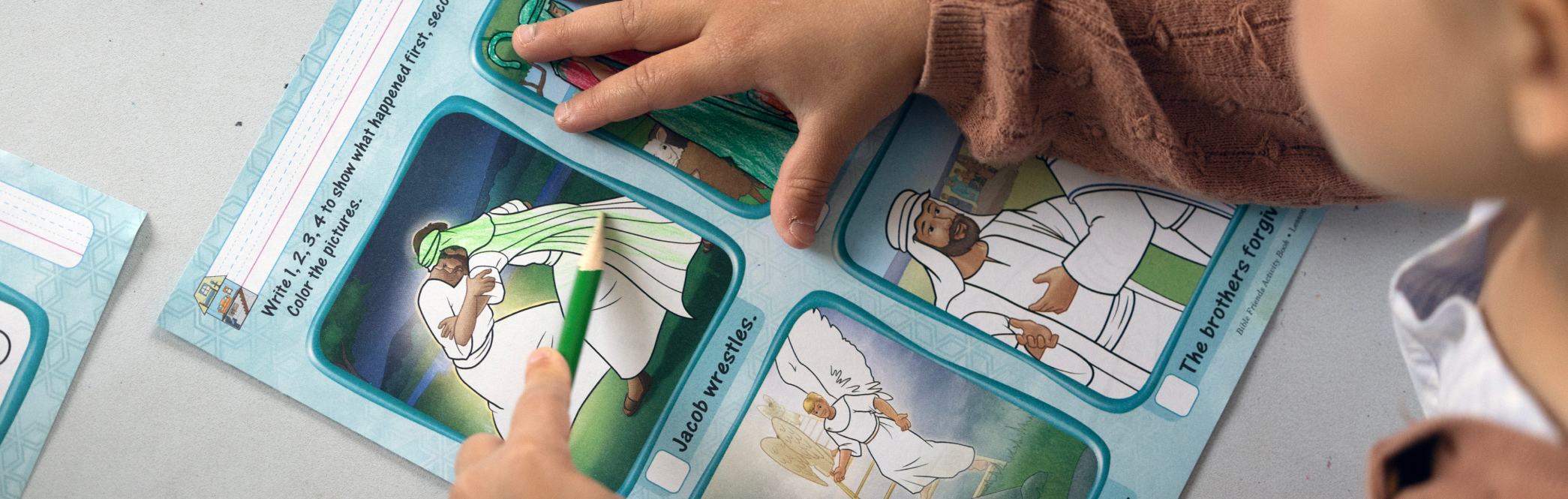
Perhaps most importantly for homeschooling families who value a biblical foundation, Abeka’s preschool program weaves faith into every part of the day. Bible stories, songs, and verses help introduce young children to God’s love in ways they can understand.
Testimony in the “Teacher Talk” series puts it this way: “When we teach them that God made them, that He loves them, and that His Word is true, we’re not just teaching theology, we’re helping form their worldview.”
This deeply intentional integration of truth with learning creates space for children to see God in all subjects, from art and science to math and language. And it makes preschool a sacred time of planting seeds that will grow over a lifetime.
Final Thoughts
At the end of the day, homeschooling your preschooler isn’t about racing toward reading milestones or mastering math facts. It’s about honoring who your child is in this season — and guiding them with love, purpose, and prayer.
So whether you’re just starting out or considering how to enrich your homeschool day with more intentionality, remember this: The preschool years are not filler years. They’re formative. And with the right tools — and a heart anchored in Christ — you’re equipped to make them count.
Want to explore more preschool curriculum options from Abeka? Visit abeka.com to learn more about how we support homeschooling families from preschool through high school.


Comments for Beyond Play, Part II: You’re Not Just Homeschooling—You’re Building a Legacy
Add A Comment
Your email address will not be published. Required fields are marked *